Chronic Binge Eating Disorder: Why It Persists & What Real Recovery Looks Like

Chronic Binge Eating Disorder: Why It Persists & What Real Recovery Looks Like

Chronic binge eating disorder is not a failure of willpower. It is a nervous system pattern shaped by restriction, shame, trauma, and unmet needs.

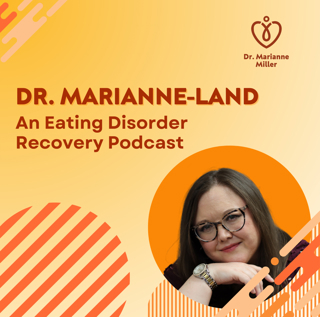
In this solo episode, Dr. Marianne Miller explores why binge eating becomes chronic, how dieting and food scarcity fuel the cycle, and what real recovery actually looks like for adults living with long-term binge eating disorder. If you feel stuck in the binge cycle, this conversation offers clarity, compassion, and a realistic path forward.

Chronic Binge Eating Disorder Is Not About Weakness

Many people living with chronic binge eating disorder believe that if they were more disciplined, more motivated, or more in control, the behavior would stop. This episode challenges that harmful narrative. Chronic binge eating disorder persists because powerful biological and psychological systems are involved. Restriction increases hunger hormones and food preoccupation. Stress activates survival responses. Shame reinforces secrecy and isolation.

Dr. Marianne explains why binge eating makes sense in context and why understanding the function of the behavior is essential for sustainable binge eating recovery.

Why Binge Eating Becomes Chronic

Long-term binge eating disorder rarely develops in a vacuum. Dieting, weight stigma, trauma, sensory overload, executive functioning strain, and chronic stress all contribute to the cycle. When the body experiences restriction or perceived scarcity, it responds with urgency. When the nervous system feels overwhelmed, binge eating can temporarily regulate distress.

This episode explores how biological drives, nervous system regulation, and shame interact to keep binge eating disorder chronic, even when someone desperately wants change.

Neurodivergence, Sensory Needs, and Binge Eating Disorder

For many adults, chronic binge eating disorder intersects with ADHD, autism, and other forms of neurodivergence. Food may provide stimulation, grounding, predictability, or relief from decision fatigue. Traditional binge eating treatment models often overlook these factors.

Dr. Marianne discusses how a neurodivergent-affirming approach to binge eating recovery can reduce shame and increase effectiveness by supporting sensory needs and executive functioning rather than ignoring them.

What Real Recovery From Chronic Binge Eating Disorder Looks Like

Mainstream recovery messaging often centers perfection and dramatic transformation. Real recovery from chronic binge eating disorder is usually quieter and more gradual. It begins with safety rather than control. It focuses on consistent nourishment, nervous system regulation, and shame reduction.

This episode outlines how sustainable binge eating recovery involves stabilizing food intake, reducing restriction, expanding coping strategies, and building self-compassion. Progress is measured not by perfection, but by increased flexibility, dignity, and safety in the body.

Related Episodes

Healing Binge Eating Disorder: One Woman’s Journey Toward Body Trust & Food Freedom With Dr. Michelle Tubman, M.D. @wayzahealth on Apple & Spotify.

Lived Experience of Having Both Bulimia & Binge Eating Disorder With Milda Zolubaite @nutrition.path on Apple & Spotify.

ADHD & Binge Eating Disorder With Toni Rudd @the.binge.dietitian on Apple & Spotify.

Join the Binge Eating Recovery Membership

If you are navigating chronic binge eating disorder and want ongoing, compassionate support, Dr. Marianne’s Binge Eating Recovery Membership offers structured guidance rooted in neurodivergent-affirming, trauma-informed, and weight-inclusive care.

Inside the membership, you will learn practical tools for nervous system regulation, reduce shame around binge eating, and build sustainable recovery strategies in community.

Learn more at: drmariannemiller.com

Key Topics in This Episode

Chronic binge eating disorder Long-term binge eating patterns Binge eating recovery for adults Restriction and binge cycle Nervous system regulation and food Neurodivergence and binge eating Shame and eating disorders Weight-inclusive eating disorder treatment

Denne episoden er hentet fra en åpen RSS-feed og er ikke publisert av Podme. Den kan derfor inneholde annonser.

Episoder(351)

Have a Chronic Eating Disorder? Why Late-Diagnosed ADHD May Have Been the Issue All Along

Have a Chronic Eating Disorder? Why Late-Diagnosed ADHD May Have Been the Issue All Along

ADHD and eating disorders often overlap in ways that treatment misses. For adults with late-diagnosed ADHD, chronic restriction, binge eating, bulimia, ARFID, food inconsistency, and repeated eating d...

23 Sep 20min

Eating Disorders in Midlife: Rebuilding Trust With Food & Your Body With Amber Caudle

Eating Disorders in Midlife: Rebuilding Trust With Food & Your Body With Amber Caudle

Binge eating recovery requires more than changing what or how you eat. Chef, eating psychology coach, and author Amber Caudle joins Dr. Marianne to discuss her 30-year struggle with binge eating, rest...

21 Sep 33min

ARFID & PDA: Why Eating Can Feel Like a Demand Even When No One Is Pressuring You

ARFID & PDA: Why Eating Can Feel Like a Demand Even When No One Is Pressuring You

ARFID and PDA can make eating feel difficult even when no one is telling you what, when, or how much to eat. For autistic and neurodivergent people with Avoidant/Restrictive Food Intake Disorder (ARFI...

18 Sep 15min

Tradwives, Disordered Eating, & the Thin Ideal: Why Young Women Are Being Told to Shrink Again

Tradwives, Disordered Eating, & the Thin Ideal: Why Young Women Are Being Told to Shrink Again

Tradwife culture is having a moment, but what happens when traditional femininity, purity culture, the thin ideal, and disordered eating begin to overlap? In this SOLO episode, Dr. Marianne Miller exa...

16 Sep 20min

Is Eating Disorder Recovery a Form of Neurodivergence? Diet Culture, Hunger, & Body Trust With Shira Collings, LPC

Is Eating Disorder Recovery a Form of Neurodivergence? Diet Culture, Hunger, & Body Trust With Shira Collings, LPC

Eating disorder recovery often requires developing a relationship with food, hunger, movement, and body size that differs sharply from what society considers “normal.” In this conversation, Dr. Marian...

14 Sep 27min

Autism, Food Rigidity, & Eating Disorders: How Autistic Traits Can Help & Hinder Recovery

Autism, Food Rigidity, & Eating Disorders: How Autistic Traits Can Help & Hinder Recovery

Autism and eating disorders can create a complicated relationship with food rigidity, routines, sensory needs, and predictability. For autistic people recovering from anorexia, ARFID, bulimia, or othe...

11 Sep 19min

Why Is Eating Disorder Recovery So Scary? Understanding Fear, Safety, & Letting Go

Why Is Eating Disorder Recovery So Scary? Understanding Fear, Safety, & Letting Go

Eating disorder recovery can feel surprisingly scary, even when you genuinely want to get better. Letting go of restriction, binge eating, purging, compulsive exercise, food rules, or body checking ca...

9 Sep 15min

How to Help Your Child With an Eating Disorder: Replacing Control With Connection With Dr. Tom Wooldridge

How to Help Your Child With an Eating Disorder: Replacing Control With Connection With Dr. Tom Wooldridge

Supporting a child or teen with an eating disorder can leave parents caught between the urgency to help them eat and the fear that increasing control will create more conflict around food. In this epi...

7 Sep 32min

Populært innen Helse

fastlegen
rss-gukild-johaug
psykodrama
hvordan-har-du-det-mann
relasjonspodden-med-dora-thorhallsdottir-kjersti-idem
leger-om-livet
rss-skravla-gar
foreldreradet
g-punktet
morten-ramm-lar-kakla-ga-til-du-sovner
rss-loping-for-nybegynnere
klimaks
bak-fasaden-en-reise-i-livet-med-sykepleier-ine
rss-dagen-for-dagen
treningsprat
rss-lopedrommen
hjernesterk
kjed-deg-i-sovn-verdens-kjedeligste-podcast
rss-kunsten-a-leve
helsetipspodden