The SVOM Satellite: A New Era in Multi-Messenger Astronomy

The SVOM Satellite: A New Era in Multi-Messenger Astronomy

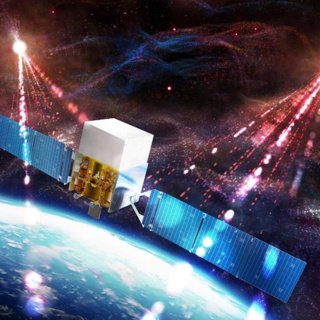
In this episode, we dive into the fascinating world of gamma-ray bursts (GRBs) and high-energy transients through the lens of the SVOM (Space-based Multi-band Variable Object Monitor) mission. Launched in June 2024, this Sino-French satellite uses a powerful suite of instruments to detect, localize, and study some of the universe's most extreme events, such as dying massive stars and colliding neutron stars. We explore three of its core instruments: the ECLAIRs trigger camera, the Gamma-Ray Monitor (GRM), and the Visible Telescope (VT). Discover how these tools work together in near real-time to capture everything from high-redshift GRBs in the early universe to optical afterglows and thermonuclear X-ray bursts.


Key Topics Covered:

  • The SVOM Mission: An overview of the satellite, which operates in a 625 km low-Earth orbit, and its primary goal to study GRBs and support multi-messenger astrophysics (like gravitational wave follow-ups).
  • ECLAIRs Trigger Camera: A look at the 4–150 keV wide-field coded mask camera that serves as SVOM's autonomous trigger. When ECLAIRs detects a transient, it can prompt the satellite to automatically slew, or rotate, to point its narrow-field telescopes directly at the burst.
  • Gamma-Ray Monitor (GRM): SVOM’s high-energy sentinel covering an energy range of 15 keV up to 5 MeV. We discuss how its large sensitive area helps measure the spectral and temporal properties of bursts, achieving a detection rate of over 100 GRBs per year.
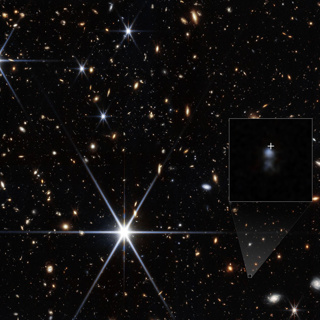
  • Visible Telescope (VT): A deep dive into SVOM's 44-cm aperture optical/near-infrared telescope. Learn how the VT achieved an impressive ~85% detection rate for GRBs observed within the first 10 minutes, and how its deep sensitivity helped identify the mission's highest-redshift burst to date, GRB 250314A, from when the universe was in its infancy (redshift 7.3).


References & Further Reading:

1. The Gamma-Ray Monitor onboard the SVOM satellite by Jian-Chao Sun, Yong-Wei Dong, Jiang He, et al.

2. SVOM/VT: Instrument Overview, Science Objectives, and First-Year Performance by Yu-Lei Qiu, Li-Ping Xin, Jin-Song Deng, et al.

3. ECLAIRs: the SVOM high-energy transient trigger camera by O. Godet, J.-L. Atteia, S. Schanne, et al.


Acknowledements: Podcast prepared with Google/NotebookLM. Illustration credits: SVOM, CNRS

Denne episoden er hentet fra en åpen RSS-feed og er ikke publisert av Podme. Den kan derfor inneholde annonser.

Episoder(112)

Peering Through the Ice: The Milky Way’s High-Energy Neutrino Signal

Peering Through the Ice: The Milky Way’s High-Energy Neutrino Signal

Peering Through the Ice: The Milky Way’s High-Energy Neutrino Signal Episode Summary: In this episode, we explore a major breakthrough in astrophysics: the IceCube Neutrino Observatory has established...

31 Jul 20min

The Schmidt Observatory System unlocking the Transient Universe

The Schmidt Observatory System unlocking the Transient Universe

In this episode, we dive into the Eric and Wendy Schmidt Observatory System, a groundbreaking initiative designed to pioneer a new paradigm for astronomical research through rapid development, modular...

27 Jul 21min

GUANO, NITRATES, and GLIMPSE: The Pipelines Powering Multi-Messenger Astronomy

GUANO, NITRATES, and GLIMPSE: The Pipelines Powering Multi-Messenger Astronomy

In this episode, we dive into the cutting-edge of time-domain and multi-messenger astrophysics with a deep look at BAT-GLIMPSE, a revolutionary new open-source pipeline developed for the Neil Gehrels ...

20 Jul 20min

The Dynamic Radio Sky: Unveiling Transients with the SKAO

The Dynamic Radio Sky: Unveiling Transients with the SKAO

Welcome to a deep dive into the fast-paced, explosive universe of time-domain astronomy! In this episode, we explore how the upcoming Square Kilometre Array Observatory (SKAO) will revolutionize our u...

13 Jul 19min

X-Raying the Earth: Neutrino Tomography at the South Pole

X-Raying the Earth: Neutrino Tomography at the South Pole

Welcome back to the podcast! Today, we are exploring a groundbreaking new way scientists are looking deep inside our planet. For a century, our understanding of the Earth's interior has relied almost ...

8 Jul 23min

SVOM's First Year: From Gamma-Ray Bursts to Blazars

SVOM's First Year: From Gamma-Ray Bursts to Blazars

In this episode, we dive into the exciting early results from the SVOM (Space-based multi-band astronomical Variable Objects Monitor) mission, which launched in June 2024. Originally designed to hunt ...

6 Jul 20min

SN 2024jlc: Bridging the Gap Between Supernova Classes

SN 2024jlc: Bridging the Gap Between Supernova Classes

In this episode, we dive into the fascinating discovery of SN 2024jlc, one of the closest and least luminous super-luminous supernovae (SLSNe) ever found. We explore how this extraordinary event is ch...

3 Jul 20min

Cosmic Accelerators: Unlocking the Secrets of Microquasar GRS 1915+105

Cosmic Accelerators: Unlocking the Secrets of Microquasar GRS 1915+105

In this episode, we dive into the extreme and fascinating world of microquasars—binary systems where a compact object, like a black hole, feeds off a companion star and launches powerful, relativistic...

26 Jun 20min

Populært innen Vitenskap

fastlegen
tingenes-tilstand
romkapsel
rss-nysgjerrige-norge
liberal-halvtime
rekommandert
jss
villmarksliv
dekodet-2
abels-tarn
sinnsyn
vett-og-vitenskap-med-gaute-einevoll
fjellsportpodden
rss-overskuddsliv
rss-rekommandert
rss-paradigmepodden
tomprat-med-gunnar-tjomlid
diagnose
rss-inn-til-kjernen-med-sunniva-rose
nordnorsk-historie