
Infrastructure as Code - Simply Explained

Infrastructure as Code - Simply Explained

Managing cloud infrastructure by clicking through the Azure Portal might work for a single virtual machine, but it quickly becomes slow, inconsistent, and difficult to maintain as environments grow. Infrastructure as Code (IaC) changes that completely. In this episode, we explain Infrastructure as Code in plain English, showing how organizations automate Azure deployments using reusable templates instead of manual configuration. Whether you're an IT administrator, cloud engineer, developer, or just beginning your Azure journey, this episode provides a practical introduction to one of the most important concepts in modern cloud computing.

THE PROBLEM WITH MANUAL DEPLOYMENTS
Creating Azure resources manually through the portal introduces human error, inconsistent configurations, and configuration drift between development, testing, and production environments. Every mouse click becomes an opportunity to select the wrong region, choose an incorrect virtual machine size, misconfigure networking, or overlook important security settings. As organizations scale, these small inconsistencies become major operational challenges that consume valuable time and increase business risk. Infrastructure as Code eliminates these problems by replacing manual deployment with repeatable automation.

WHAT IS INFRASTRUCTURE AS CODE?
Infrastructure as Code, often abbreviated as IaC, is the practice of describing cloud infrastructure in source code instead of configuring resources manually. Rather than clicking through deployment wizards, administrators write files that define the desired infrastructure. Azure then reads these files and automatically provisions resource groups, virtual networks, storage accounts, virtual machines, databases, and security settings exactly as specified. This declarative approach focuses on the desired outcome while Azure handles the deployment process automatically.

THE AZURE INFRASTRUCTURE AS CODE TOOLKIT
Microsoft provides several technologies for implementing Infrastructure as Code. ARM Templates were the original deployment format, offering complete Azure coverage through JSON-based templates. Bicep builds upon ARM by providing a cleaner, easier-to-read language that compiles directly into ARM Templates while dramatically improving the authoring experience. Organizations operating across multiple cloud providers often choose Terraform, while Azure-focused teams increasingly adopt Bicep because of its native Azure integration, simplified syntax, and immediate support for new Azure services.

VERSION CONTROL CHANGES EVERYTHING
The greatest advantage of Infrastructure as Code is not simply automation—it's version control. By storing infrastructure definitions in Git repositories, organizations gain complete visibility into every infrastructure change. Teams can review modifications through pull requests, track deployment history, roll back problematic changes, and ensure development, testing, and production environments are built from the exact same source files. Infrastructure becomes fully auditable, collaborative, and significantly easier to maintain over time.

SECURITY BUILT INTO EVERY DEPLOYMENT
Infrastructure as Code enables organizations to standardize security from the very beginning. Encryption, networking policies, firewall rules, HTTPS enforcement, and compliance requirements become part of the deployment template itself instead of relying on manual configuration. Combined with Azure Policy, Azure Key Vault, and automated deployment pipelines, Infrastructure as Code helps organizations prevent configuration drift while ensuring every new environment follows the same secure baseline.

GETTING STARTED WITH IAC
Adopting Infrastructure as Code doesn't require rebuilding an entire Azure environment overnight. A practical starting point is exporting an existing Azure deployment as an ARM Template, studying its structure, and gradually transitioning to Bicep for future deployments. Microsoft provides free tooling through Azure CLI, Visual Studio Code, and the official Bicep extension, allowing administrators to learn incrementally while automating increasingly complex Azure workloads over time.

COMMON MISTAKES TO AVOID
New users often make several predictable mistakes when adopting Infrastructure as Code. Hardcoding passwords instead of using Azure Key Vault, treating templates as one-time deployment scripts, and making quick manual changes directly in the Azure Portal all introduce security risks and configuration drift. Maintaining descriptive templates, storing everything in source control, validating deployments before execution, and avoiding manual production changes help ensure long-term success with Infrastructure as Code.

WHY EVERY AZURE PROFESSIONAL SHOULD LEARN IAC
Infrastructure as Code has become a foundational skill for modern Azure administration. It improves deployment consistency, simplifies disaster recovery, enables CI/CD automation, strengthens security, supports collaboration, and dramatically reduces human error. Whether you're managing a single Azure subscription or enterprise-scale cloud platforms, Infrastructure as Code provides a reliable and scalable way to build, maintain, and evolve your cloud infrastructure with confidence.

KEY TAKEAWAYS
Infrastructure as Code replaces manual Azure configuration with repeatable, version-controlled deployment files that become the single source of truth for your cloud environment. By combining automation, security, governance, and collaboration into one modern workflow, IaC allows organizations to deploy Azure resources faster, reduce operational risk, and maintain consistent environments across every stage of the application lifecycle. It's no longer an advanced cloud technique—it's the standard approach to managing modern Azure infrastructure.

Become a supporter of this podcast: https://www.spreaker.com/podcast/m365-fm-modern-work-security-and-productivity-with-microsoft-365--6704921/support.

Denne episoden er hentet fra en åpen RSS-feed og er ikke publisert av Podme. Den kan derfor inneholde annonser.

Episoder(740)

Azure MCP Server - Simply Explained

Azure MCP Server - Simply Explained

Artificial Intelligence is rapidly evolving from simply answering questions to actively performing real work. But for AI agents to become truly useful, they need secure access to cloud resources, data...

15 Jul 17min
Dynamics 365 ERP MCP Server - Simply Explained

Dynamics 365 ERP MCP Server - Simply Explained

Artificial Intelligence is transforming how businesses interact with enterprise systems, but connecting AI assistants to ERP platforms has traditionally required custom APIs, complex integrations, and...

15 Jul 13min
Canvas Apps vs Model-Driven Apps - Simply Explained

Canvas Apps vs Model-Driven Apps - Simply Explained

Microsoft Power Apps offers two primary ways to build business applications: Canvas Apps and Model-Driven Apps. At first glance they may appear similar, but they are designed for very different scenar...

15 Jul 15min
Bicep - Simply Explained

Bicep - Simply Explained

Deploying Azure resources through the Azure Portal is great for learning, but it quickly becomes difficult to repeat, document, and automate. That's where Bicep comes in. In this episode, we explain M...

15 Jul 16min
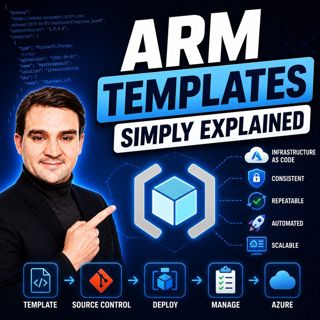
ARM Templates - Simply Explained

ARM Templates - Simply Explained

If you've ever built Azure resources by clicking through the Azure Portal, you've probably wondered how large organizations deploy identical environments over and over again without making mistakes. T...

15 Jul 15min

Teams Telephony - Simply Explained

Teams Telephony - Simply Explained

Microsoft Teams Telephony transforms Microsoft Teams into a complete cloud-based business phone system, replacing traditional office PBXs with a modern, software-powered solution. In this episode, we ...

15 Jul 17min
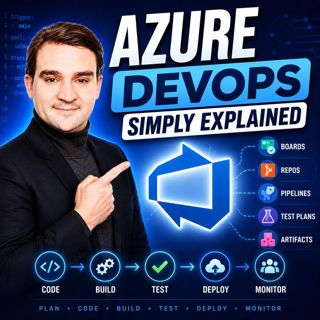
Azure DevOps - Simply Explained

Azure DevOps - Simply Explained

Azure DevOps is one of Microsoft's most comprehensive platforms for software development, yet many people mistakenly believe it's only for developers. In reality, Azure DevOps brings together project ...

15 Jul 17min

Populært innen Politikk og nyheter

giver-og-gjengen-vg
aftenpodden-usa
aftenpodden
fotballpodden-2
forklart
popradet
stopp-verden
det-store-bildet
rss-gukild-johaug
hanna-de-heldige
rss-ness
nokon-ma-ga
dine-penger-pengeradet
aftenbla-bla
rss-utenrikskomiteen-med-bogen-og-grasvik
lydartikler-fra-aftenposten
e24-podden
rss-penger-polser-og-politikk
rss-hor-na-krim-2
rss-espen-lee-usensurert