#186 – Dean Spears on why babies are born small in Uttar Pradesh, and how to save their lives

#186 – Dean Spears on why babies are born small in Uttar Pradesh, and how to save their lives

"I work in a place called Uttar Pradesh, which is a state in India with 240 million people. One in every 33 people in the whole world lives in Uttar Pradesh. It would be the fifth largest country if it were its own country. And if it were its own country, you’d probably know about its human development challenges, because it would have the highest neonatal mortality rate of any country except for South Sudan and Pakistan. Forty percent of children there are stunted. Only two-thirds of women are literate. So Uttar Pradesh is a place where there are lots of health challenges.

"And then even within that, we’re working in a district called Bahraich, where about 4 million people live. So even that district of Uttar Pradesh is the size of a country, and if it were its own country, it would have a higher neonatal mortality rate than any other country. In other words, babies born in Bahraich district are more likely to die in their first month of life than babies born in any country around the world." — Dean Spears

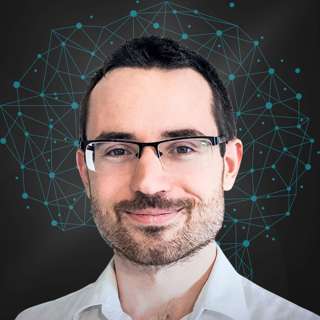
In today’s episode, host Luisa Rodriguez speaks to Dean Spears — associate professor of economics at the University of Texas at Austin and founding director of r.i.c.e. — about his experience implementing a surprisingly low-tech but highly cost-effective kangaroo mother care programme in Uttar Pradesh, India to save the lives of vulnerable newborn infants.

Links to learn more, highlights, and full transcript.

They cover:

  • The shockingly high neonatal mortality rates in Uttar Pradesh, India, and how social inequality and gender dynamics contribute to poor health outcomes for both mothers and babies.
  • The remarkable benefits for vulnerable newborns that come from skin-to-skin contact and breastfeeding support.
  • The challenges and opportunities that come with working with a government hospital to implement new, evidence-based programmes.
  • How the currently small programme might be scaled up to save more newborns’ lives in other regions of Uttar Pradesh and beyond.
  • How targeted health interventions stack up against direct cash transfers.
  • Plus, a sneak peak into Dean’s new book, which explores the looming global population peak that’s expected around 2080, and the consequences of global depopulation.
  • And much more.

Chapters:

  • Why is low birthweight a major problem in Uttar Pradesh? (00:02:45)
  • Neonatal mortality and maternal health in Uttar Pradesh (00:06:10)
  • Kangaroo mother care (00:12:08)
  • What would happen without this intervention? (00:16:07)
  • Evidence of KMC’s effectiveness (00:18:15)
  • Longer-term outcomes (00:32:14)
  • GiveWell’s support and implementation challenges (00:41:13)
  • How can KMC be so cost effective? (00:52:38)
  • Programme evaluation (00:57:21)
  • Is KMC is better than direct cash transfers? (00:59:12)
  • Expanding the programme and what skills are needed (01:01:29)
  • Fertility and population decline (01:07:28)
  • What advice Dean would give his younger self (01:16:09)

Producer and editor: Keiran Harris
Audio engineering lead: Ben Cordell
Technical editing: Simon Monsour, Milo McGuire, and Dominic Armstrong
Additional content editing: Katy Moore and Luisa Rodriguez
Transcriptions: Katy Moore

Episoder(326)

#226 – Holden Karnofsky on unexploited opportunities to make AI safer — and all his AGI takes

#226 – Holden Karnofsky on unexploited opportunities to make AI safer — and all his AGI takes

For years, working on AI safety usually meant theorising about the ‘alignment problem’ or trying to convince other people to give a damn. If you could find any way to help, the work was frustrating an...

30 Okt 20254h 30min
#225 – Daniel Kokotajlo on what a hyperspeed robot economy might look like

#225 – Daniel Kokotajlo on what a hyperspeed robot economy might look like

When Daniel Kokotajlo talks to security experts at major AI labs, they tell him something chilling: “Of course we’re probably penetrated by the CCP already, and if they really wanted something, they c...

27 Okt 20252h 12min

#224 – There's a cheap and low-tech way to save humanity from any engineered disease | Andrew Snyder-Beattie

#224 – There's a cheap and low-tech way to save humanity from any engineered disease | Andrew Snyder-Beattie

Conventional wisdom is that safeguarding humanity from the worst biological risks — microbes optimised to kill as many as possible — is difficult bordering on impossible, making bioweapons humanity’s ...

2 Okt 20252h 31min

Inside the Biden admin’s AI policy approach | Jake Sullivan, Biden’s NSA | via The Cognitive Revolution

Inside the Biden admin’s AI policy approach | Jake Sullivan, Biden’s NSA | via The Cognitive Revolution

Jake Sullivan was the US National Security Advisor from 2021-2025. He joined our friends on The Cognitive Revolution podcast in August to discuss AI as a critical national security issue. We thought i...

26 Sep 20251h 5min

#223 – Neel Nanda on leading a Google DeepMind team at 26 – and advice if you want to work at an AI company (part 2)

#223 – Neel Nanda on leading a Google DeepMind team at 26 – and advice if you want to work at an AI company (part 2)

At 26, Neel Nanda leads an AI safety team at Google DeepMind, has published dozens of influential papers, and mentored 50 junior researchers — seven of whom now work at major AI companies. His secret?...

15 Sep 20251h 46min

#222 – Can we tell if an AI is loyal by reading its mind? DeepMind's Neel Nanda (part 1)

#222 – Can we tell if an AI is loyal by reading its mind? DeepMind's Neel Nanda (part 1)

We don’t know how AIs think or why they do what they do. Or at least, we don’t know much. That fact is only becoming more troubling as AIs grow more capable and appear on track to wield enormous cultu...

8 Sep 20253h 1min

#221 – Kyle Fish on the most bizarre findings from 5 AI welfare experiments

#221 – Kyle Fish on the most bizarre findings from 5 AI welfare experiments

What happens when you lock two AI systems in a room together and tell them they can discuss anything they want?According to experiments run by Kyle Fish — Anthropic’s first AI welfare researcher — som...

28 Aug 20252h 28min

How not to lose your job to AI (article by Benjamin Todd)

How not to lose your job to AI (article by Benjamin Todd)

About half of people are worried they’ll lose their job to AI. They’re right to be concerned: AI can now complete real-world coding tasks on GitHub, generate photorealistic video, drive a taxi more sa...

31 Jul 202551min

Populært innen Fakta

mikkels-paskenotter
fastlegen
dine-penger-pengeradet
relasjonspodden-med-dora-thorhallsdottir-kjersti-idem
foreldreradet
rss-strid-de-norske-borgerkrigene
treningspodden
jakt-og-fiskepodden
takk-og-lov-med-anine-kierulf
sinnsyn
hverdagspsyken
rss-bisarr-historie
tomprat-med-gunnar-tjomlid
rss-kunsten-a-leve
rss-kull
fryktlos
rss-var-forste-kaffe
rss-sunn-okonomi
gravid-uke-for-uke
hagespiren-podcast