Episode 906: Case Study of Hypernatremia

Episode 906: Case Study of Hypernatremia

Contributor: Aaron Lessen MD

Educational Pearls:

The case:

  • A gentleman came in from a nursing home with symptoms concerning for sepsis. He was hypotensive, hypoxic, febrile, and mentally altered.

  • His past medical history included previous strokes which had left him with deficits for which he required a feeding tube.

  • Initial workup included some point of care labs which revealed a sodium of 165 mEq/L (normal range 135-145)

Hypernatremia

  • What causes it?

    • Dehydration, from insufficient fluid intake. This might happen in individuals who cannot drink water independently, such as infants, elderly, or disabled people, as was the case for this patient.

    • Other causes of dehydration/hypernatremia include excessive sweating; diabetes insipidus; diuretic use; kidney dysfunction; and severe burns which can lead to fluid loss through the damaged skin.

  • How do you correct it?

    • Need to correct slowly, not more than 10 to 12 meq/L in 24 hours

    • Can do normal saline (0.9%) or half saline (0.45%) and D5, at 150-200 mL per hour.

    • Check the sodium frequently (every 2-3 hours)

    • Will likely need ICU-level monitoring

  • What happens if you correct it too quickly?

    • Cerebral edema

    • Seizures

Bonus fact: Correction of hyponatremia too quickly causes osmotic demyelination syndrome (ODS).

References

  1. Chauhan, K., Pattharanitima, P., Patel, N., Duffy, A., Saha, A., Chaudhary, K., Debnath, N., Van Vleck, T., Chan, L., Nadkarni, G. N., & Coca, S. G. (2019). Rate of Correction of Hypernatremia and Health Outcomes in Critically Ill Patients. Clinical journal of the American Society of Nephrology : CJASN, 14(5), 656–663. https://doi.org/10.2215/CJN.10640918

  2. Lindner, G., & Funk, G. C. (2013). Hypernatremia in critically ill patients. Journal of critical care, 28(2), 216.e11–216.e2.16E20. https://doi.org/10.1016/j.jcrc.2012.05.001

  3. Muhsin, S. A., & Mount, D. B. (2016). Diagnosis and treatment of hypernatremia. Best practice & research. Clinical endocrinology & metabolism, 30(2), 189–203. https://doi.org/10.1016/j.beem.2016.02.014

Summarized by Jeffrey Olson MS2 | Edited by Meg Joyce & Jorge Chalit, OMSIII

Episoder(1148)

Podcast 583:  Raise Your Hands if You Have Carpal Tunnel Syndrome

Podcast 583: Raise Your Hands if You Have Carpal Tunnel Syndrome

Contributor: Aaron Lessen, MD Educational Pearls: Hand raising test: a simple but effective tool to diagnose carpal tunnel  Patients hold their hands over their head and if symptoms of carpal tunnel ...

3 Aug 20202min
Rapid Fire Pharmacy Review with Adis Keric of ER-Rx

Rapid Fire Pharmacy Review with Adis Keric of ER-Rx

Meet Adis Keric, Board Certified Pharmacotherapy Specialist and a Board Certified Critical Care pharmacist who works in the Emergency Department and ICU of level 1 trauma center Regions Hospital in Sa...

29 Jul 202018min
Podcast 582:  Gadolinium - The Contrast of MRI

Podcast 582: Gadolinium - The Contrast of MRI

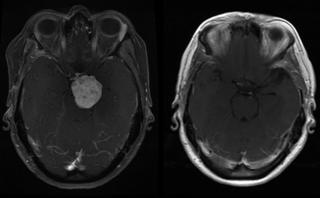
Contributor: Michael Hunt, MD Educational Pearls: Contrast agents are commonly used for X-rays and CT's to better characterize disease, but contrast doesn't work with MRI. That's where the element Ga...

28 Jul 20204min

Podcast 581:  Alcohol Complications

Podcast 581: Alcohol Complications

\Contributor: Don Stader, MD Educational Pearls: Altered mental status/confusion are major symptoms associated with both alcohol use and withdrawal. Wernicke's encephalopathy is a triad of symptoms o...

27 Jul 20206min
On The Streets #6: Artificial Intelligence Detection for LVOs

On The Streets #6: Artificial Intelligence Detection for LVOs

Meet Michelle Whaley, Clinical Nurse Specialist and Stroke Program Coordinator at Sky Ridge Medical Center in Lone Tree, Colorado. Jordan and Michelle discuss advances in Artificial Intelligence techn...

22 Jul 202021min
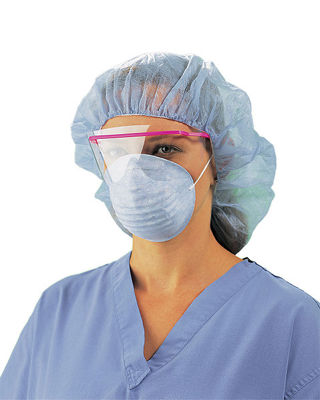
Podcast 580:  Origin of PPE

Podcast 580: Origin of PPE

Contributor: Michael Hunt, MD Educational Pearls: PPE, or personal protective equipment, has become a major talking point since the emergence of the novel coronavirus (COVID 19). While ubiquitous now...

21 Jul 20204min

Podcast 579:  Yersinia Pestis

Podcast 579: Yersinia Pestis

Contributor: Don Stader, MD Educational Pearls: Yersinia Pestis is the bacteria that caused the black plague. It was first discovered to be the cause of the bubonic plague in 1800s in China during th...

20 Jul 20203min

Podcast 578: Brown-Sequard Syndrome

Podcast 578: Brown-Sequard Syndrome

Author: Eric Miller, MD Educational Pearls: Brown-Sequard Syndrome is a neurological deficit that results from hemisection of the spinal cord  This is usually from traumatic injury (blunt or penetrat...

14 Jul 20202min

Populært innen Vitenskap

fastlegen
tingenes-tilstand
rekommandert
jss
sinnsyn
forskningno
villmarksliv
liberal-halvtime
rss-rekommandert
fjellsportpodden
dekodet-2
rss-paradigmepodden
rss-overskuddsliv
tidlose-historier
tomprat-med-gunnar-tjomlid
utenrikshospitalet
katastrofe-i-hjernen
pod-britannia
rss-nysgjerrige-norge
rss-lundqvist-podden