Tiling the Sky for Multi-Messenger Astronomy

Tiling the Sky for Multi-Messenger Astronomy

Description: Tilepy is an open-source platform revolutionizing multi-messenger astrophysics by optimizing the scheduling of follow-up observations for events with large sky localization uncertainties, such as gravitational waves, gamma-ray bursts, and high-energy neutrinos.

Main Points

● What is Tilepy? Tilepy is a Python package designed to efficiently schedule observations by correlating galaxy distributions with 3D localization information and optimizing observation strategies across the electromagnetic spectrum.

● How does it work? Tilepy employs sophisticated algorithms that take into account telescope visibility and observability constraints to create observation plans that prioritize the most probable regions of an event.

● Key features:

○ Automatic generation of optimized observation plans.

○ Versatility for various transient events.

○ Integration with Astro-COLIBRI for user-friendly scheduling via web and smartphone apps.

○ Customization options for individual needs and research objectives.

● Real-world impact: Tilepy is the default scheduling tool for high-energy gamma-ray observatories like H.E.S.S. and CTA/LST-1. It was instrumental in the rapid follow-up of GW170817, allowing H.E.S.S. to be the first ground-based instrument to observe the merger location.

● Accessibility: Tilepy is an open-source project available on GitHub, encouraging community contributions and collaboration.


Pronunciation: "Tile-pie" ;-)


Main Papers:

● M. Seglar-Arroyo et al., “Cross-Observatory Coordination with tilepy: A Novel Tool for Observations of Multi-Messenger Transient Events”, ApJS 274 1 (2024)

● H. Ashkar et al., "The H.E.S.S. gravitational wave rapid follow-up program", JCAP 03 (2021) 045


Additional Resources

● Tilepy GitHub repository: https://github.com/astro-transients/Tilepy

● Tilepy website: https://tilepy.com

● Astro-COLIBRI platform: https://astro-colibri.science


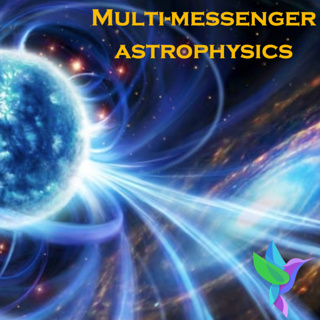
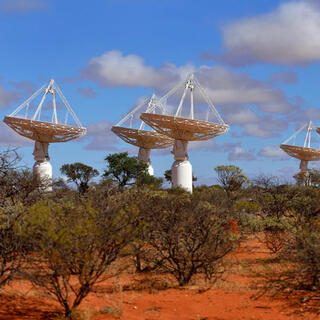
Illustration from tilepy.com. Podcast created with Google/NotebookLM.

Denne episoden er hentet fra en åpen RSS-feed og er ikke publisert av Podme. Den kan derfor inneholde annonser.

Episoder(112)

Peering Through the Ice: The Milky Way’s High-Energy Neutrino Signal

Peering Through the Ice: The Milky Way’s High-Energy Neutrino Signal

Peering Through the Ice: The Milky Way’s High-Energy Neutrino Signal Episode Summary: In this episode, we explore a major breakthrough in astrophysics: the IceCube Neutrino Observatory has established...

31 Jul 20min

The Schmidt Observatory System unlocking the Transient Universe

The Schmidt Observatory System unlocking the Transient Universe

In this episode, we dive into the Eric and Wendy Schmidt Observatory System, a groundbreaking initiative designed to pioneer a new paradigm for astronomical research through rapid development, modular...

27 Jul 21min

GUANO, NITRATES, and GLIMPSE: The Pipelines Powering Multi-Messenger Astronomy

GUANO, NITRATES, and GLIMPSE: The Pipelines Powering Multi-Messenger Astronomy

In this episode, we dive into the cutting-edge of time-domain and multi-messenger astrophysics with a deep look at BAT-GLIMPSE, a revolutionary new open-source pipeline developed for the Neil Gehrels ...

20 Jul 20min

The Dynamic Radio Sky: Unveiling Transients with the SKAO

The Dynamic Radio Sky: Unveiling Transients with the SKAO

Welcome to a deep dive into the fast-paced, explosive universe of time-domain astronomy! In this episode, we explore how the upcoming Square Kilometre Array Observatory (SKAO) will revolutionize our u...

13 Jul 19min

X-Raying the Earth: Neutrino Tomography at the South Pole

X-Raying the Earth: Neutrino Tomography at the South Pole

Welcome back to the podcast! Today, we are exploring a groundbreaking new way scientists are looking deep inside our planet. For a century, our understanding of the Earth's interior has relied almost ...

8 Jul 23min

SVOM's First Year: From Gamma-Ray Bursts to Blazars

SVOM's First Year: From Gamma-Ray Bursts to Blazars

In this episode, we dive into the exciting early results from the SVOM (Space-based multi-band astronomical Variable Objects Monitor) mission, which launched in June 2024. Originally designed to hunt ...

6 Jul 20min

SN 2024jlc: Bridging the Gap Between Supernova Classes

SN 2024jlc: Bridging the Gap Between Supernova Classes

In this episode, we dive into the fascinating discovery of SN 2024jlc, one of the closest and least luminous super-luminous supernovae (SLSNe) ever found. We explore how this extraordinary event is ch...

3 Jul 20min

Cosmic Accelerators: Unlocking the Secrets of Microquasar GRS 1915+105

Cosmic Accelerators: Unlocking the Secrets of Microquasar GRS 1915+105

In this episode, we dive into the extreme and fascinating world of microquasars—binary systems where a compact object, like a black hole, feeds off a companion star and launches powerful, relativistic...

26 Jun 20min

Populært innen Vitenskap

fastlegen
tingenes-tilstand
romkapsel
rss-nysgjerrige-norge
liberal-halvtime
rekommandert
jss
villmarksliv
dekodet-2
abels-tarn
sinnsyn
vett-og-vitenskap-med-gaute-einevoll
fjellsportpodden
rss-overskuddsliv
rss-rekommandert
rss-paradigmepodden
tomprat-med-gunnar-tjomlid
diagnose
rss-inn-til-kjernen-med-sunniva-rose
nordnorsk-historie