#124 Classic episode – Karen Levy on fads and misaligned incentives in global development, and scaling deworming to reach hundreds of millions

#124 Classic episode – Karen Levy on fads and misaligned incentives in global development, and scaling deworming to reach hundreds of millions

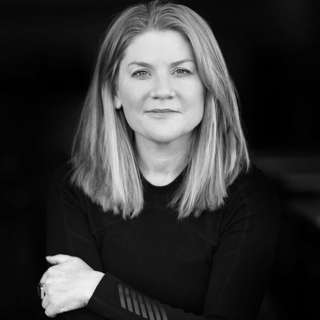
If someone said a global health and development programme was sustainable, participatory, and holistic, you'd have to guess that they were saying something positive. But according to today's guest Karen Levy — deworming pioneer and veteran of Innovations for Poverty Action, Evidence Action, and Y Combinator — each of those three concepts has become so fashionable that they're at risk of being seriously overrated and applied where they don't belong.

Rebroadcast: this episode was originally released in March 2022.

Links to learn more, highlights, and full transcript.

Such concepts might even cause harm — trying to make a project embody all three is as likely to ruin it as help it flourish.

First, what do people mean by 'sustainability'? Usually they mean something like the programme will eventually be able to continue without needing further financial support from the donor. But how is that possible? Governments, nonprofits, and aid agencies aim to provide health services, education, infrastructure, financial services, and so on — and all of these require ongoing funding to pay for materials and staff to keep them running.

Given that someone needs to keep paying, Karen tells us that in practice, 'sustainability' is usually a euphemism for the programme at some point being passed on to someone else to fund — usually the national government. And while that can be fine, the national government of Kenya only spends $400 per person to provide each and every government service — just 2% of what the US spends on each resident. Incredibly tight budgets like that are typical of low-income countries.

'Participatory' also sounds nice, and inasmuch as it means leaders are accountable to the people they're trying to help, it probably is. But Karen tells us that in the field, ‘participatory’ usually means that recipients are expected to be involved in planning and delivering services themselves.

While that might be suitable in some situations, it's hardly something people in rich countries always want for themselves. Ideally we want government healthcare and education to be high quality without us having to attend meetings to keep it on track — and people in poor countries have as many or more pressures on their time. While accountability is desirable, an expectation of participation can be as much a burden as a blessing.

Finally, making a programme 'holistic' could be smart, but as Karen lays out, it also has some major downsides. For one, it means you're doing lots of things at once, which makes it hard to tell which parts of the project are making the biggest difference relative to their cost. For another, when you have a lot of goals at once, it's hard to tell whether you're making progress, or really put your mind to focusing on making one thing go extremely well. And finally, holistic programmes can be impractically expensive — Karen tells the story of a wonderful 'holistic school health' programme that, if continued, was going to cost 3.5 times the entire school's budget.

In this in-depth conversation, originally released in March 2022, Karen Levy and host Rob Wiblin chat about the above, as well as:

  • Why it pays to figure out how you'll interpret the results of an experiment ahead of time
  • The trouble with misaligned incentives within the development industry
  • Projects that don't deliver value for money and should be scaled down
  • How Karen accidentally became a leading figure in the push to deworm tens of millions of schoolchildren
  • Logistical challenges in reaching huge numbers of people with essential services
  • Lessons from Karen's many-decades career
  • And much more

Chapters:

  • Cold open (00:00:00)
  • Rob's intro (00:01:33)
  • The interview begins (00:02:21)
  • Funding for effective altruist–mentality development projects (00:04:59)
  • Pre-policy plans (00:08:36)
  • ‘Sustainability’, and other myths in typical international development practice (00:21:37)
  • ‘Participatoriness’ (00:36:20)
  • ‘Holistic approaches’ (00:40:20)
  • How the development industry sees evidence-based development (00:51:31)
  • Initiatives in Africa that should be significantly curtailed (00:56:30)
  • Misaligned incentives within the development industry (01:05:46)
  • Deworming: the early days (01:21:09)
  • The problem of deworming (01:34:27)
  • Deworm the World (01:45:43)
  • Where the majority of the work was happening (01:55:38)
  • Logistical issues (02:20:41)
  • The importance of a theory of change (02:31:46)
  • Ways that things have changed since 2006 (02:36:07)
  • Academic work vs policy work (02:38:33)
  • Fit for Purpose (02:43:40)
  • Living in Kenya (03:00:32)
  • Underrated life advice (03:05:29)
  • Rob’s outro (03:09:18)

Producer: Keiran Harris
Audio mastering: Ben Cordell and Ryan Kessler
Transcriptions: Katy Moore

Avsnitt(318)

#88 – Tristan Harris on the need to change the incentives of social media companies

#88 – Tristan Harris on the need to change the incentives of social media companies

In its first 28 days on Netflix, the documentary The Social Dilemma — about the possible harms being caused by social media and other technology products — was seen by 38 million households in about 1...

3 Dec 20202h 35min

Benjamin Todd on what the effective altruism community most needs (80k team chat #4)

Benjamin Todd on what the effective altruism community most needs (80k team chat #4)

In the last '80k team chat' with Ben Todd and Arden Koehler, we discussed what effective altruism is and isn't, and how to argue for it. In this episode we turn now to what the effective altruism comm...

12 Nov 20201h 25min

#87 – Russ Roberts on whether it's more effective to help strangers, or people you know

#87 – Russ Roberts on whether it's more effective to help strangers, or people you know

If you want to make the world a better place, would it be better to help your niece with her SATs, or try to join the State Department to lower the risk that the US and China go to war? People involve...

3 Nov 20201h 49min

How much does a vote matter? (Article)

How much does a vote matter? (Article)

Today’s release is the latest in our series of audio versions of our articles.In this one — How much does a vote matter? — I investigate the two key things that determine the impact of your vote: • ...

29 Okt 202031min

#86 – Hilary Greaves on Pascal's mugging, strong longtermism, and whether existing can be good for us

#86 – Hilary Greaves on Pascal's mugging, strong longtermism, and whether existing can be good for us

Had World War 1 never happened, you might never have existed. It’s very unlikely that the exact chain of events that led to your conception would have happened otherwise — so perhaps you wouldn't have...

21 Okt 20202h 24min

Benjamin Todd on the core of effective altruism and how to argue for it (80k team chat #3)

Benjamin Todd on the core of effective altruism and how to argue for it (80k team chat #3)

Today’s episode is the latest conversation between Arden Koehler, and our CEO, Ben Todd. Ben’s been thinking a lot about effective altruism recently, including what it really is, how it's framed, an...

22 Sep 20201h 24min

Ideas for high impact careers beyond our priority paths (Article)

Ideas for high impact careers beyond our priority paths (Article)

Today’s release is the latest in our series of audio versions of our articles. In this one, we go through some more career options beyond our priority paths that seem promising to us for positively ...

7 Sep 202027min

Benjamin Todd on varieties of longtermism and things 80,000 Hours might be getting wrong (80k team chat #2)

Benjamin Todd on varieties of longtermism and things 80,000 Hours might be getting wrong (80k team chat #2)

Today’s bonus episode is a conversation between Arden Koehler, and our CEO, Ben Todd. Ben’s been doing a bunch of research recently, and we thought it’d be interesting to hear about how he’s current...

1 Sep 202057min

Populärt inom Utbildning

rss-bara-en-till-om-missbruk-medberoende-2
historiepodden-se
det-skaver
nu-blir-det-historia
alska-oss
sektledare
harrisons-dramatiska-historia
allt-du-velat-veta
johannes-hansen-podcast
rss-sjalsligt-avkladd
rss-viktmedicinpodden
not-fanny-anymore
rss-max-tant-med-max-villman
i-vantan-pa-katastrofen
sa-in-i-sjalen
roda-vita-rosen
rss-basta-livet
rikatillsammans-om-privatekonomi-rikedom-i-livet
rss-npf-podden
sex-pa-riktigt-med-marika-smith