#203 – Peter Godfrey-Smith on interfering with wild nature, accepting death, and the origin of complex civilisation

#203 – Peter Godfrey-Smith on interfering with wild nature, accepting death, and the origin of complex civilisation

"In the human case, it would be mistaken to give a kind of hour-by-hour accounting. You know, 'I had +4 level of experience for this hour, then I had -2 for the next hour, and then I had -1' — and you sort of sum to try to work out the total… And I came to think that something like that will be applicable in some of the animal cases as well… There are achievements, there are experiences, there are things that can be done in the face of difficulty that might be seen as having the same kind of redemptive role, as casting into a different light the difficult events that led up to it.

"The example I use is watching some birds successfully raising some young, fighting off a couple of rather aggressive parrots of another species that wanted to fight them, prevailing against difficult odds — and doing so in a way that was so wholly successful. It seemed to me that if you wanted to do an accounting of how things had gone for those birds, you would not want to do the naive thing of just counting up difficult and less-difficult hours. There’s something special about what’s achieved at the end of that process." —Peter Godfrey-Smith

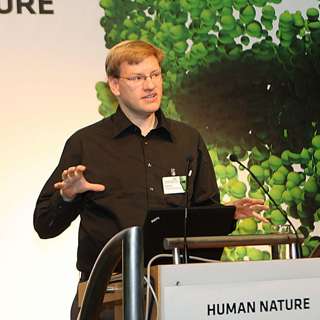
In today’s episode, host Luisa Rodriguez speaks to Peter Godfrey-Smith — bestselling author and science philosopher — about his new book, Living on Earth: Forests, Corals, Consciousness, and the Making of the World.

Links to learn more, highlights, and full transcript.

They cover:

  • Why octopuses and dolphins haven’t developed complex civilisation despite their intelligence.
  • How the role of culture has been crucial in enabling human technological progress.
  • Why Peter thinks the evolutionary transition from sea to land was key to enabling human-like intelligence — and why we should expect to see that in extraterrestrial life too.
  • Whether Peter thinks wild animals’ lives are, on balance, good or bad, and when, if ever, we should intervene in their lives.
  • Whether we can and should avoid death by uploading human minds.
  • And plenty more.

Chapters:

  • Cold open (00:00:00)
  • Luisa's intro (00:00:57)
  • The interview begins (00:02:12)
  • Wild animal suffering and rewilding (00:04:09)
  • Thinking about death (00:32:50)
  • Uploads of ourselves (00:38:04)
  • Culture and how minds make things happen (00:54:05)
  • Challenges for water-based animals (01:01:37)
  • The importance of sea-to-land transitions in animal life (01:10:09)
  • Luisa's outro (01:23:43)

Producer: Keiran Harris
Audio engineering: Ben Cordell, Milo McGuire, Simon Monsour, and Dominic Armstrong
Content editing: Luisa Rodriguez, Katy Moore, and Keiran Harris
Transcriptions: Katy Moore

Jaksot(322)

#33 - Anders Sandberg on what if we ended ageing, solar flares & the annual risk of nuclear war

#33 - Anders Sandberg on what if we ended ageing, solar flares & the annual risk of nuclear war

Joseph Stalin had a life-extension program dedicated to making himself immortal. What if he had succeeded?  According to our last guest, Bryan Caplan, there’s an 80% chance that Stalin would still be ...

29 Touko 20181h 24min
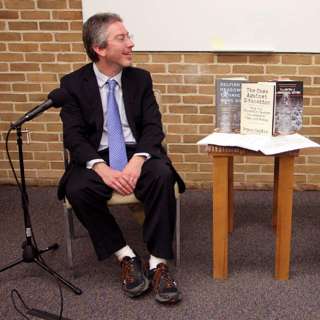
#32 - Bryan Caplan on whether his Case Against Education holds up, totalitarianism, & open borders

#32 - Bryan Caplan on whether his Case Against Education holds up, totalitarianism, & open borders

Bryan Caplan’s claim in *The Case Against Education* is striking: education doesn’t teach people much, we use little of what we learn, and college is mostly about trying to seem smarter than other peo...

22 Touko 20182h 25min
#31 - Allan Dafoe on defusing the political & economic risks posed by existing AI capabilities

#31 - Allan Dafoe on defusing the political & economic risks posed by existing AI capabilities

The debate around the impacts of artificial intelligence often centres on ‘superintelligence’ - a general intellect that is much smarter than the best humans, in practically every field. But according...

18 Touko 201848min
#30 - Eva Vivalt on how little social science findings generalize from one study to another

#30 - Eva Vivalt on how little social science findings generalize from one study to another

If we have a study on the impact of a social program in a particular place and time, how confident can we be that we’ll get a similar result if we study the same program again somewhere else? Dr Eva V...

15 Touko 20182h 1min
#29 - Anders Sandberg on 3 new resolutions for the Fermi paradox & how to colonise the universe

#29 - Anders Sandberg on 3 new resolutions for the Fermi paradox & how to colonise the universe

Part 2 out now: #33 - Dr Anders Sandberg on what if we ended ageing, solar flares & the annual risk of nuclear war The universe is so vast, yet we don’t see any alien civilizations. If they exist, whe...

8 Touko 20181h 21min
#28 - Owen Cotton-Barratt on why scientists should need insurance, PhD strategy & fast AI progresses

#28 - Owen Cotton-Barratt on why scientists should need insurance, PhD strategy & fast AI progresses

A researcher is working on creating a new virus – one more dangerous than any that exist naturally. They believe they’re being as careful as possible. After all, if things go wrong, their own life and...

27 Huhti 20181h 3min
#27 - Dr Tom Inglesby on careers and policies that reduce global catastrophic biological risks

#27 - Dr Tom Inglesby on careers and policies that reduce global catastrophic biological risks

How about this for a movie idea: a main character has to prevent a new contagious strain of Ebola spreading around the world. She’s the best of the best. So good in fact, that her work on early detect...

18 Huhti 20182h 16min
#26 - Marie Gibbons on how exactly clean meat is made & what's needed to get it in every supermarket

#26 - Marie Gibbons on how exactly clean meat is made & what's needed to get it in every supermarket

First, decide on the type of animal. Next, pick the cell type. Then take a small, painless biopsy, and put the cells in a solution that makes them feel like they’re still in the body. Once the cells a...

10 Huhti 20181h 44min

Suosittua kategoriassa Koulutus

rss-murhan-anatomia
voi-hyvin-meditaatiot-2
psykopodiaa-podcast
rss-narsisti
rss-vapaudu-voimaasi
rss-liian-kuuma-peruna
psykologia
kesken
rss-niinku-asia-on
rss-uskonto-on-tylsaa
rahapuhetta
rss-valo-minussa-2
rss-luonnollinen-synnytys-podcast
rss-hereilla
ihminen-tavattavissa-tommy-hellsten-instituutti
rss-duodecim-lehti
rss-tietoinen-yhteys-podcast-2
rss-sielun-aani-podcast
avara-mieli
rss-arkea-ja-aurinkoa-podcast-espanjasta