Fabric Dataflows Gen2: The Future of ETL in Microsoft Fabric and How to Migrate Your Existing Dataflows

Fabric Dataflows Gen2: The Future of ETL in Microsoft Fabric and How to Migrate Your Existing Dataflows

Fabric Dataflows Gen2: The Future of ETL in Microsoft Fabric

If you’ve been juggling separate Power Query scripts, Data Factory pipelines and custom SQL jobs just to keep your reports alive, Fabric Dataflows Gen2 is your chance to simplify everything. In this episode, I walk through why Microsoft rebuilt dataflows as a first‑class Fabric resource—so your transformations live once, feed Lakehouse, Warehouse and Power BI together, and stop breaking every time an upstream schema changes

We start with the pain of today’s fragmented ETL. You’ll recognize the pattern: the same logic duplicated across tools, parallel pipelines for different teams, and endless arguments about why numbers don’t match between reports that supposedly use the same source. I trace how this grew out of disconnected services and why it capped the scalability of even well‑run data teams.

Then we dive into the core architecture of Dataflows Gen2. You’ll learn how compute separation lets you scale transformation power without inflating storage, how managed staging kills off zombie temp tables, and how the new authoring and deployment model finally treats ETL like a governed, versioned asset instead of a side script. With concrete examples, we look at how a single dataflow can support both detailed analytics and summarized reporting without cloning logic in three places.

Finally, we explore what “seamless across Fabric” really means in practice. Instead of exporting and re‑importing data between tools, your dataflows feed Lakehouse, Warehouse and semantic models directly, so each part of Fabric sees the same, consistent transformation output. By the end, you’ll know when to move ETL into Dataflows Gen2, which legacy jobs to retire first, and how this shift can free up a significant chunk of the time your data team currently spends just keeping fragile pipelines alive.

WHAT YOU’LL LEARN
  • Why fragmented ETL across Power Query, Data Factory and SQL has become a scaling bottleneck.
  • How Fabric Dataflows Gen2 changes the architecture with compute separation and managed staging.
  • How a single, governed dataflow can feed Lakehouse, Warehouse and Power BI without duplicated logic.
  • When and how to start migrating existing ETL into Dataflows Gen2 for a more maintainable Fabric environment.
THE CORE INSIGHT

The core insight of this episode is that ETL is no longer a side process glued onto your analytics stack—it’s a first‑class Fabric asset. Once your transformations live in Dataflows Gen2 instead of being scattered across scripts and pipelines, you get cleaner governance, easier scaling and far fewer surprises every time your data model changes.

WHO THIS EPISODE IS FOR
  • Data engineers and BI teams maintaining multiple overlapping ETL jobs in the Microsoft stack.
  • Architects planning or running Microsoft Fabric who need a sustainable ETL strategy.
  • Analytics leaders who want consistent, trustworthy numbers across reports without endless pipeline firefighting.
ABOUT THE AUTHOR / HOST

Mirko Peters is a Microsoft 365 and data platform consultant and host of the M365.FM podcast, helping organizations move from fragile, tool‑sprawled ETL to unified, Fabric‑first data architectures. He works with data and BI teams to design reusable Dataflows Gen2 patterns, deployment pipelines and governance models so transformation logic becomes an asset the whole organization can rely on, not a collection of hidden scripts.

Become a supporter of this podcast: https://www.spreaker.com/podcast/m365-fm-modern-work-security-and-productivity-with-microsoft-365--6704921/support.

Denne episoden er hentet fra en åpen RSS-feed og er ikke publisert av Podme. Den kan derfor inneholde annonser.

Episoder(740)

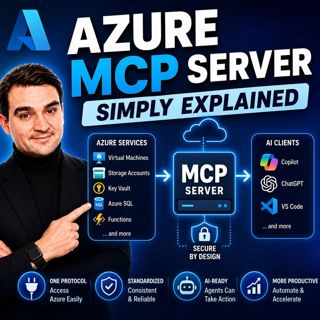
Azure MCP Server - Simply Explained

Azure MCP Server - Simply Explained

Artificial Intelligence is rapidly evolving from simply answering questions to actively performing real work. But for AI agents to become truly useful, they need secure access to cloud resources, data...

15 Jul 17min
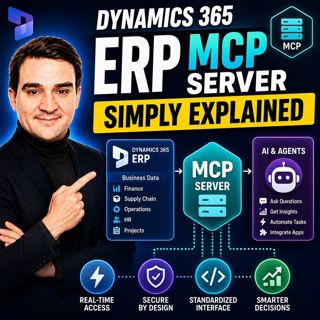
Dynamics 365 ERP MCP Server - Simply Explained

Dynamics 365 ERP MCP Server - Simply Explained

Artificial Intelligence is transforming how businesses interact with enterprise systems, but connecting AI assistants to ERP platforms has traditionally required custom APIs, complex integrations, and...

15 Jul 13min
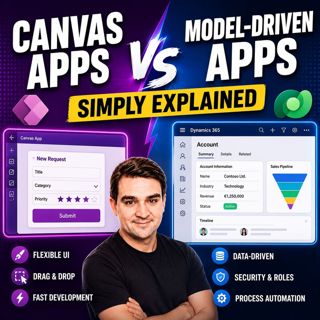
Canvas Apps vs Model-Driven Apps - Simply Explained

Canvas Apps vs Model-Driven Apps - Simply Explained

Microsoft Power Apps offers two primary ways to build business applications: Canvas Apps and Model-Driven Apps. At first glance they may appear similar, but they are designed for very different scenar...

15 Jul 15min
Infrastructure as Code - Simply Explained

Infrastructure as Code - Simply Explained

Managing cloud infrastructure by clicking through the Azure Portal might work for a single virtual machine, but it quickly becomes slow, inconsistent, and difficult to maintain as environments grow. I...

15 Jul 16min
Bicep - Simply Explained

Bicep - Simply Explained

Deploying Azure resources through the Azure Portal is great for learning, but it quickly becomes difficult to repeat, document, and automate. That's where Bicep comes in. In this episode, we explain M...

15 Jul 16min
ARM Templates - Simply Explained

ARM Templates - Simply Explained

If you've ever built Azure resources by clicking through the Azure Portal, you've probably wondered how large organizations deploy identical environments over and over again without making mistakes. T...

15 Jul 15min

Teams Telephony - Simply Explained

Teams Telephony - Simply Explained

Microsoft Teams Telephony transforms Microsoft Teams into a complete cloud-based business phone system, replacing traditional office PBXs with a modern, software-powered solution. In this episode, we ...

15 Jul 17min
Azure DevOps - Simply Explained

Azure DevOps - Simply Explained

Azure DevOps is one of Microsoft's most comprehensive platforms for software development, yet many people mistakenly believe it's only for developers. In reality, Azure DevOps brings together project ...

15 Jul 17min

Populært innen Politikk og nyheter

giver-og-gjengen-vg
aftenpodden-usa
aftenpodden
fotballpodden-2
forklart
popradet
stopp-verden
det-store-bildet
rss-gukild-johaug
hanna-de-heldige
rss-ness
nokon-ma-ga
dine-penger-pengeradet
aftenbla-bla
rss-utenrikskomiteen-med-bogen-og-grasvik
lydartikler-fra-aftenposten
e24-podden
rss-penger-polser-og-politikk
rss-hor-na-krim-2
rss-espen-lee-usensurert