Beyond SELECT in Microsoft Fabric: Why T‑SQL Still Controls Cost, Performance, and Governance in Modern Data Platforms

Beyond SELECT in Microsoft Fabric: Why T‑SQL Still Controls Cost, Performance, and Governance in Modern Data Platforms

Most organizations believe modern platforms like Microsoft Fabric made T‑SQL optional. On the surface, pipelines run, reports refresh, and stakeholders see charts — so it is easy to conclude that SQL has become just one of many implementation details. But in reality, T‑SQL did not disappear. It moved upstream, into the layer where cost overruns, performance incidents, security drift, and audit findings are created long before anyone notices them in Power BI.

In this episode of M365.FM, Mirko Peters examines why treating T‑SQL as “just query syntax” consistently produces fragile Fabric estates — and why the organizations that win with Microsoft Fabric treat T‑SQL as a contract language for their data platform. This is a conversation about the structural difference between writing queries and designing contracts, between debugging slow reports and engineering predictable execution plans, and between using Fabric as a convenient data lake and using warehouses, views, and procedures as enforcement zones for truth, access, and cost.

The organizations that will lead their industries are not those that wrote the most SQL, but those that use T‑SQL to make their platform deterministic. They centralize logic in views and procedures instead of scattering it across Power BI, notebooks, and apps. They treat execution plans as governance artifacts, not just troubleshooting tools. And they accept that in Fabric, every unmanaged “SELECT *” and every vague join is not just a technical shortcut — it is an unapproved commitment of cost, performance risk, and security exposure.

WHAT YOU WILL LEARN
  • Why “Beyond SELECT” is about responsibility, not features — and why modern data stacks that optimize for convenience without contracts drift into non‑deterministic behavior.
  • How SQL actually executes under the hood, and why understanding execution order and plans matters more in Fabric where shared capacity turns bad patterns directly into cloud bills.
  • How to read execution plans as early warning signals for cost and risk: scanned vs returned rows, spills, joins, sorts, and why “it works” is not the same as “it’s safe to standardize.”
  • How schema‑on‑read and raw Lakehouse tables become Warehouse liabilities when you don’t enforce constraints, contracts, and validation at the boundary.
  • Why parameter sniffing and plan caching create “random” performance and cost spikes — and what trade‑offs exist between recompilation, general plans, and branching logic.
  • How missing database‑layer permissions turn workspace roles into security debt, and why least privilege in Fabric still begins with T‑SQL roles, grants, and denies.
  • When indexing, partitioning, and structural redesign matter more than query tuning — and how to recognize system‑shape problems posing as SQL problems.
  • Why Copilot‑generated SQL accelerates both good and bad patterns, and how execution plans can become acceptance tests for AI‑written queries.
THE CORE INSIGHT

T‑SQL in Microsoft Fabric is not primarily about retrieving data. It is about enforcing intent. Every query and every object either makes your platform more deterministic (same question, same answer, within known cost and latency) or more probabilistic (sometimes fast, sometimes slow, sometimes cheap, sometimes expensive, sometimes correct, sometimes “close enough”).Mirko argues that Fabric did not remove the need for relational thinking — it removed the friction that used to slow bad decisions down. When a single workspace, shared capacity, and Copilot can push new SQL into production paths at refresh speed, your only real defense against entropy is to move contracts, governance, and enforcement into the same engine that now runs everything. T‑SQL is still the control surface where shape, access, and cost become enforceable — or where they are quietly left to chance.

WHO THIS EPISODE IS FOR
  • Data engineering leaders and tech leads working with Microsoft Fabric, Warehouses, and Lakehouses.
  • SQL and Fabric developers who feel their queries “work” but see unpredictable performance and cloud cost.
  • Power BI and Fabric architects responsible for shared capacities, semantic models, and governed query surfaces.
  • Platform, security, and governance teams who need to turn T‑SQL and execution plans into part of their control story, not just their troubleshooting toolkit.
ABOUT THE HOST

Mirko Peters is a Microsoft 365 and Azure architect, strategist, and the host of M365.FM — a podcast focused on modern work, security, data, and operating model design in the Microsoft ecosystem. He works with organizations from midmarket to global enterprise to turn Microsoft Fabric, Power BI, and Copilot into governed data platforms rather than collections of ad‑hoc pipelines and dashboards. His work centers on data engineering with Fabric, T‑SQL and semantic contract design, Azure and M365 architecture, and the hard reality of keeping cost, performance, governance, and developer velocity aligned in modern Microsoft data estates


Become a supporter of this podcast: https://www.spreaker.com/podcast/m365-fm-modern-work-security-and-productivity-with-microsoft-365--6704921/support.

Det här avsnittet är hämtat från ett öppet RSS-flöde och publiceras inte av Podme. Det kan innehålla reklam.

Avsnitt(864)

From Excel Expert to Microsoft MVP: Empowering Millions with Data, Dashboards & AI with Karen Abecia [Microsoft MVP]

From Excel Expert to Microsoft MVP: Empowering Millions with Data, Dashboards & AI with Karen Abecia [Microsoft MVP]

aren Abecia shares the remarkable journey that transformed a passion for Microsoft Excel into a global career as one of the world's best-known Excel educators. She explains how discovering creative sp...

27 Juli 0s

The Copilot Credit Trap- Why Your AI Economy is Already Broken

The Copilot Credit Trap- Why Your AI Economy is Already Broken

For decades, enterprise software followed a predictable financial model. Organizations purchased licenses, assigned them to users, and budgeted annual IT spending with confidence. AI changes that comp...

26 Juli 0s

The End of AI Bloat: Why Modern Agents Need Skills

The End of AI Bloat: Why Modern Agents Need Skills

Many AI agents start out fast, responsive, and surprisingly intelligent. But after a few months of real-world use, something changes. Response times increase, costs rise, prompts become enormous, and ...

26 Juli 0s

THE DEATH OF THE PROXY: Architecting Dataverse for the Agent Fabric

THE DEATH OF THE PROXY: Architecting Dataverse for the Agent Fabric

For years, Microsoft's recommended architecture for connecting AI assistants like Claude Desktop to Dataverse relied on a local STDIO proxy. It was simple, easy to install, and perfectly suited for in...

26 Juli 0s
The Death of the Pipeline: Why AI Agents are Replacing Traditional

The Death of the Pipeline: Why AI Agents are Replacing Traditional

For more than two decades, CI/CD pipelines have been the backbone of modern software delivery. Developers commit code, automated builds run, tests execute, security scans complete, someone approves th...

25 Juli 0s
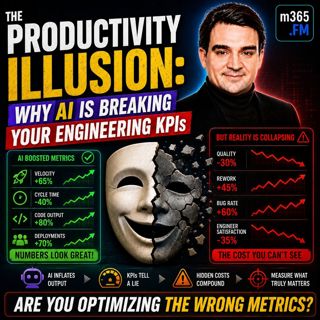
The Productivity Illusion: Why AI is Breaking Your Engineering KPIs

The Productivity Illusion: Why AI is Breaking Your Engineering KPIs

At first glance, the numbers look incredible. Deployment frequency is increasing, pull requests are being merged faster than ever, AI is generating more code, and engineering teams appear dramatically...

25 Juli 0s
The DevOps Tax: Why Your Platform is Failing

The DevOps Tax: Why Your Platform is Failing

Welcome to another episode of Knowledge Nuggets with Mirko Peters. Today we're exploring The DevOps Tax—the hidden cost that silently reduces engineering productivity, increases cognitive overload, an...

25 Juli 0s
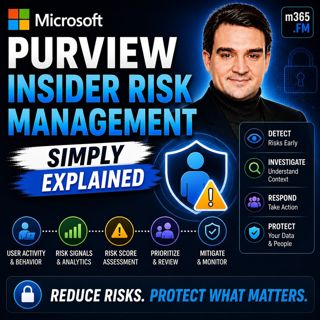
Microsoft Purview Insider Risk Management - Simply Explained

Microsoft Purview Insider Risk Management - Simply Explained

Welcome to another episode of Knowledge Nuggets with Mirko Peters. Today we're exploring Microsoft Purview Insider Risk Management, Microsoft's intelligent solution for identifying risky user behavior...

24 Juli 0s
Populärt inom Politik & nyheter

svenska-fall
p3-krim
aftonbladet-daily
aftonbladet-krim
rss-sanning-konsekvens
flashback-forever
tv4-nyheterna-story
rss-krimstad
rss-krimreportrarna
motiv
de-fyras-gang
rss-frandfors-horna
rss-vad-fan-hande
rss-flodet
politiken
mannen-utan-spar
rss-aftonbladet-krim
spar
krimmagasinet
grans